Govinda Namalu in English: Full Lyrics, Meaning, Significance, and Chanting Benefits
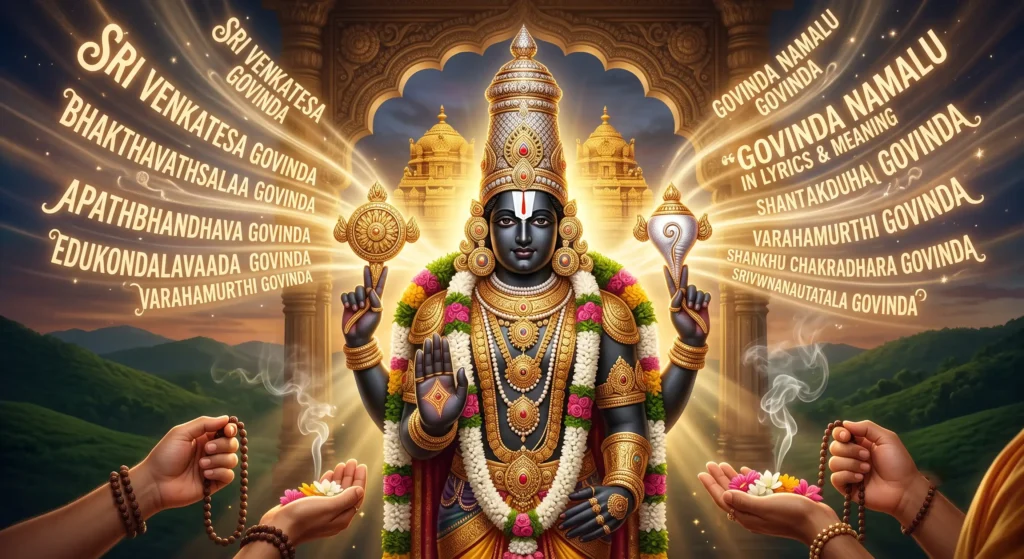
The sacred chant known as Govinda Namalu is one of the most powerful, emotionally resonant, and widely revered devotional hymns in Hinduism, particularly dedicated to Lord Venkateswara (a manifestation of Lord Vishnu residing at the holy Tirumala Hills in Andhra Pradesh, India). Chanting or listening to these sacred names fills the environment with divine energy, bringing peace, spiritual protection, and clarity to the mind. The term Govinda translates to “the protector of cows,” “the finder of the Earth,” or “the ultimate giver of joy to the senses.” For centuries, pilgrims walking up the seven hills of Tirumala have echoed the powerful chant Govinda! Govinda! to surrender their ego, physical tiredness, and worldly troubles at the feet of the Supreme Lord.
This comprehensive guide on Govinda Namalu in English, Hindi, Tamil provides the complete text as traditionally recited by devotees, accompanied by deep verse-by-verse structural breakdowns, translations, historical insights, and spiritual reflections. Whether you are looking for daily prayer routines, trying to understand the profound philosophical meanings behind each divine name, or simply seeking spiritual solace through sacred chanting, this detailed guide offers everything you need to deepen your devotion and connection with Lord Venkateswara.
Song Description
The Govinda Namalu is a traditional devotional chant composed of short, highly rhythmic stanzas praising Lord Venkateswara (Srinivasa/Vishnu). Unlike classical Carnatic compositions bound strictly to complex musical ragas, this holy hymn is designed to be accessible to every individual regardless of musical training. It is written in simple, highly rhythmic Sanskrit transliterated across several Indian languages, making it easy to chant collectively in temples, homes, and during long pilgrimages.
The core narrative of the hymn revolves around praising the various incarnations (Avatars) of Lord Vishnu—such as Matsya, Kurma, Varaha, Narasimha, Vamana, Rama, and Krishna—while highlighting his unique attributes as the resident deity of Tirumala (Edukondalavada, Lord of Seven Hills). The composition emphasizes key concepts of Hindu philosophy including Saranagati (total surrender), divine grace, protection of the righteousness (Dharma), and the destruction of negative karmic influences. Its massive popularity stems from its rhythmic simplicity, intense devotional emotion (Bhakti), and its association with the famous Tirumala Tirupati Devasthanams (TTD) temple, one of the most visited pilgrimage sites in the world.
Song Details
| Field | Information |
|---|---|
| Song Name | Govinda Namalu (Sri Govinda Namavali) |
| Artist / Vocalists | Traditional Devotional / Rendered by M.S. Subbulakshmi, P. Susheela, Ghantasala, and various classical artists |
| Album | Devotional Chants on Lord Venkateswara / Tirumala Sacred Hymns |
| Released | Ancient Traditional Composition (Recorded across various albums over decades) |
| Language | Sanskrit / Telugu Transliteration |
| Genre | Devotional / Stotram / Namavali Chanting |
| Composer | Traditional Sages and Devotees of Lord Venkateswara (Traditional Heritage) |
| Lyricist | Traditional Devotional Literature |
| Duration | Varies (Typically 8 to 15 minutes depending on speed and repetition) |
Govinda Mamalu Song Lyrics in english
Below is the full text of the traditional sacred hymn, formatted in clear English transliteration for daily chanting and recitation:
✅ You May Also Like:
Om Namo Venkatesaya

Srinivasa Govinda
Sri Venkatesa Govinda
Bhakthavathsalaa Govinda
Bhagavathapriya Govinda
Nithyanirmala Govinda
Neelameghashyama Govinda
Puranapurusha Govinda
Pumdarikaksha Govinda

Govinda Hari Govinda
Gokulanandana Govinda

Nandha Nandhanaa Govinda
Navaneetha Chora Govinda
Pasupaalaka Shri Govinda
Paapavimochana Govinda
Dhushtasamhara Govinda
Dhuritha Nivaarana Govinda
Shishtaparipaalaka Govinda
Kashtanivaarana Govinda
Vajramakutadhara Govinda
Varahamurthi Govinda

Govinda Hari Govinda
Gokulanandana Govinda

Gopijanalola Govinda
Govardhanodhara Govinda
Dhasharadhanandhana Govinda
Dhashamukhamardhana Govinda
Pakshivahana Govinda
Pandavapriya Govinda
Mathsyakurma Govinda
Madhusudhana Hari Govinda
Varaha Narasimha Govinda

Govinda Hari Govinda
Gokulanandana Govinda

Vamanabrugurama Govinda
Balaramanuja Govinda
Baudhakalkidhara Govinda
Venuganapriya Govinda
Venkataramana Govinda
Seetha nayaka Govinda
Srithaparipalaka Govinda
Dharidhra janaposhaka Govinda
Dharma samsthapaka Govinda

Govinda Hari Govinda
Gokulanandana Govinda

Anadha Rakshaka Govinda
Apathbhandhava Govinda
Saranagatavatsala Govinda
Karunasagara Govinda
Kamaladhalaksha Govinda
Kamithaphaladha Govinda
Papavinashaka Govinda
Pahimurare Govinda
Sri mudhrankitha Govinda

Govinda Hari Govinda
Gokulanandana Govinda

Sri vathsankitha Govinda
Dharaneenayaka Govinda
Dhinakaratheja Govinda
Padhmavathi Priya Govinda
Prasannamurthi Govinda
Abhayahastha Govinda
Marthyavathara Govinda
Shankhu chakradhara Govinda
Shaarjagadhadhara Govinda

Govinda Hari Govinda
Gokulanandana Govinda

Virajatheerasdha Govinda
Virodhi Mardhana Govinda
Salagramadhara Govinda
Sahasthranama Govinda
Lakshmeevallabha Govinda
Lakshmanagraja Govinda
Kasthoorithilaka Govinda
Kanchanambaradhara Govinda
Garudavahana Govinda

Govinda Hari Govinda
Gokulanandana Govinda

Gajarajarakshaka Govida
Vanarasaevitha Govinda
Varadhibandhana Govinda
Edukondalavaadaa Govinda
Ekasvaroopa Govinda
Sri Raamakrishna Govinda
Raghukulanandhana Govinda
Prathyakshadhevaa Govinda
Paramadhayakara Govinda

Govinda Hari Govinda
Gokulanandana Govinda

Vajrakavachadhara Govinda
Vyjayanthimala Govinda
Vaddikasulavada Govinda
Vasudhevathanaya Govinda
Bilvapathrarchitha Govinda
Bikshuka Samsthutha Govinda
Sri Pumroopa Govinda
Shivakaeshava Moorthi Govinda
Brahmandaroopa Govinda

Govinda Hari Govinda
Gokulanandana Govinda

Bhaktha Rakshaka Govinda
Nithyakalyana Govinda
Neerajanabha Govinda
Hatheramapriya Govinda
Harisarvothama Govinda
Janardhanamurthy Govinda
Jagathsakshiroopa Govinda
Abhishaekapriya Govinda
Aapannivarana Govinda

Govinda Hari Govinda
Gokulanandana Govinda

Rathna kireeta Govinda
Ramanujanutha Govinda
Swayam prakasha Govinda
Aashrithapaksha Govinda
Nithyashubhapradha Govinda
Nikhilalokaesha Govinda
Aanandha roopaa Govinda
AadhyantharahithaGovinda
Ihaparadhayaka Govinda

Govinda Hari Govinda
Gokulanandana Govinda

Ibharajarakshaka Govinda
Paramadhayalo Govinda
Padhmanabhahari Govinda
Thirumalavasa Govinda
Thulasee Vanamali Govinda
Sheshadhrinilayaa Govinda
Sri Srinivasa Govinda
Sri Venkatesa Govinda

Govinda Hari Govinda
Gokulanandana Govinda
Song Meaning
Understanding the literal and spiritual depth of Govinda Namalu in English, Hindi, Tamil transforms simple chanting into a meditative experience. Each line addresses a specific attribute, divine act, or cosmic role of Lord Venkateswara/Vishnu.
| Language | Meaning & Philosophical Depth |
|---|---|
| English | The chant is a direct invocation of the divine qualities of Lord Vishnu in his form as Venkateswara. It praises Him as the abode of Lakshmi (Srinivasa), the ruler of Venkata Hill (Venkatesa), the protector of devotees (Bhakthavathsala), and the ultimate refuge in times of danger (Apathbhandhava). The hymn lists His divine avatars—from the primary Dashavatara forms like Matsya, Kurma, Varaha, Narasimha, Vamana, Rama, and Krishna—to His specific features at Tirumala, such as wearing the diamond crown (Vajramakuta), being adorned with the Kasturi Tilaka, and accepting worship with sacred Bilva leaves and Tulasi garlands. |
| Hindi | गोविंदा नामावली भगवान श्री वेंकटेश्वर (विष्णु) के पवित्र नामों की एक स्तुति है। इसमें भगवान के विभिन्न रूपों, अवतारों (मत्स्य, कूर्म, वराह, नृसिंह, वामन, राम, कृष्ण) और उनकी असीम कृपा का वर्णन है। यह मंत्र भक्तों को सभी संकटों (आपद्बांधव) से बचाने वाला, दुखों का निवारण करने वाला और धर्म की स्थापना करने वाला माना गया है। तिरुमाला पर्वत पर विराजमान श्रीनिवास भगवान अपने भक्तों पर सदैव दया दृष्टि रखते हैं। |
| Tamil | கோவிந்த நாமவாளி என்பது திருமலை ஸ்ரீ வேங்கடேஸ்வரப் பெருமானின் புகழையும், அவரது திவ்ய குணங்களையும் போற்றும் புனிதமான துதியாகும். இதில் பகவான் விஷ்ணுவின் அவதாரங்களான மத்ஸ்ய, கூர்ம, வராக, நரசிம்ம, வாமன, ராம, மற்றும் கிருஷ்ண அவதாரங்களின் பெருமைகள் விவரிக்கப்பட்டுள்ளன. பக்தர்களை ஆபத்திலிருந்து காப்பவராகவும், துயரங்களைப் போக்குபவராகவும், தர்மத்தை நிலைநாட்டுபவராகவும் விளங்கும் வேங்கடரமணனை போற்றி பாடும் மிக சக்திவாய்ந்த மந்திரம் இதுவாகும். |
Song Translation Summary
| Language | Translation Summary |
|---|---|
| English | “O Govinda! You are the abode of Goddess Sri (Srinivasa), the Lord of Venkata Hill, the beloved of devotees, eternally pure, dark-complexioned like rain clouds, and lotus-eyed. You are the joy of Gokula, the protector of cows, the stealer of butter, and the destroyer of evil forces. You lifted the Govardhana hill, defeated Ravana as Rama, and guided the Pandavas. You are the embodiment of compassion, the protector of the helpless, the lord of the universe, and the ruler of Tirumala.” |
| Hindi | “हे गोविंदा! आप श्रीनिवास हैं, वेंकटेश्वर हैं, भक्तों के अति प्रिय हैं और नित्य निर्मल हैं। आप गोकुल के आनंद, माखन चोर, और दुष्टों का संहार करने वाले हैं। आपने गोवर्धन पर्वत को धारण किया, दुखों का निवारण किया और शरणागतों की रक्षा की। आप ही तिरुमाला पर्वत के स्वामी, घट-घट के वासी और परम दयालु भगवान हैं।” |
| Tamil | “ஓ கோவிந்தா! நீர் ஸ்ரீநிவாசன், வேங்கடாசலபதி, அடியார்க்கு எளியவன் மற்றும் என்றும் தூய்மையானவன். கோகுலத்தின் ஆனந்தமே, வெண்ணெய் திருடிய கண்ணனே, துன்பங்களை தீர்ப்பவனே உன்னை வணங்குகிறோம். கோவர்த்தன மலையை தூக்கியவனே, எளியோரை காப்பவனே, திருமலையில் வாழும் ஸ்ரீ வேங்கடரமணனே எங்களை காத்தருள்வாய்.” |
Line-by-Line Meaning Breakdown
To help practitioners understand what each epithet signifies during recitation, here is an explanatory breakdown of the core segments of the chant:
- Srinivasa / Sri Venkatesa: The one in whose chest Goddess Lakshmi (Sri) resides, and the supreme deity governing the Venkata hills.
- Bhakthavathsalaa / Bhagavathapriya: The Lord who loves His devotees with motherly affection and cherishes sincere worship.
- Neelameghashyama / Pumdarikaksha: One who possesses a beautiful complexion resembling dark blue rain clouds and eyes like blooming lotus petals.
- Navaneetha Chora / Pasupaalaka: The divine child Krishna who playfully steals butter and protects cattle in Gokula.
- Govardhanodhara / Dhashamukhamardhana: The mighty protector who lifted Mount Govardhana on His finger and destroyed the ten-headed demon king Ravana.
- Apathbhandhava / Anadha Rakshaka: The ultimate relative/kinsman during sudden danger and the sole guardian of the destitute.
- Edukondalavaada / Sheshadhrinilaya: The divine master who resides on the Seven Hills (Edukondalu) and rests upon the serpent bed on Seshachalam.
- Vaddikasulavada: The deity who accepts small devotional monetary offerings (interest/coins) to relieve devotees of their karmic debts.
Song Highlights
- Main Theme: Total surrender (Saranagati) to the Supreme Lord Venkateswara through the chanting of His holy names.
- Dominant Emotion (Rasa): Deep devotion (Bhakti), spiritual humility, peace, and divine surrender.
- Key Message: No matter how difficult life’s obstacles are, repeating the name of Govinda brings liberation from karma, mental peace, and divine protection.
- Popularity Reason: Strongly linked to the Tirumala Tirupati temple; chanted by millions of pilgrims globally during daily prayers and festival processions.
- Music Style: Traditional Namavali stotram; simple, repetitive, rhythmic, and accessible for congregational singing.
- Target Audience: Spiritual seekers, devotees of Lord Vishnu/Venkateswara, daily meditation practitioners, and lovers of Indian devotional music.
Frequently Asked Questions
| Question | Answer |
|---|---|
| Who sang this version of Govinda Namalu? | While Govinda Namalu is an ancient traditional prayer chanted by millions, famous iconic renditions have been recorded by legendary vocalists such as Bharat Ratna M.S. Subbulakshmi, Ghantasala, P. Susheela, and various spiritual groups under temple trusts. |
| Who wrote the lyrics of Govinda Namalu? | The exact historical author remains unknown. It is a traditional Namavali (a litany of holy names) handed down through centuries of South Indian Vaishnavite devotional traditions and standardized by Tirumala shrine traditions. |
| What is the main meaning and benefit of chanting Govinda Namalu? | The chant praises Lord Vishnu across His various forms, especially as Venkateswara of Tirumala. Regular chanting is believed to destroy bad karma, remove financial and emotional anxieties, invoke divine protection, and cultivate inner peace. |
| Which temple is primarily associated with Govinda Namalu? | It is most deeply associated with the Venkateswara Temple located at Tirumala in Tirupati, Andhra Pradesh, India. |
| When is the best time to chant Govinda Namalu? | While it can be recited anytime, Brahma Muhurta (early morning before sunrise) or evening twilight (Sandhya Kaal) are considered spiritually optimal times. |
| What language is Govinda Namalu originally in? | The chant primarily consists of Sanskrit divine epithets and names, heavily popularized in Telugu, Tamil, Kannada, and Malayalam speaking regions across Southern India. |
| Can I read and chant the full text provided here? | Yes. The text of Govinda Namalu consists of traditional ancient prayer names and resides in the public domain. Devotees are encouraged to read, chant, and share it freely for spiritual practices. |
Conclusion
The Govinda Namalu stands as an enduring monument of Indian spiritual heritage and Vaishnavite devotional literature. More than just a collection of sacred epithets, it is a complete spiritual discipline condensed into simple, melodious phrases that anyone can practice. By calling upon Lord Venkateswara through names like Srinivasa, Anadha Rakshaka, Apathbhandhava, and Edukondalavaada, the practitioner constantly reminds themselves of the higher cosmic presence that sustains all life.
The profound structure of this hymn seamlessly weaves together the ancient philosophical truths of the Upanishads with the heart-filled emotion of the Bhakti movement. From invoking the divine avatars who saved the earth in ancient cosmic epochs to acknowledging the compassionate lord who resides right now on the hills of Tirumala, the prayer bridges the gap between transcendental philosophy and practical daily devotion. Chanting Govinda Namalu in English allows non-Sanskrit speakers and global devotees to connect directly with the vibration of these holy words without losing any of their profound meaning.
Incorporating this chant into your morning or evening spiritual routine can bring a profound sense of calm, mental resilience, and positive energy into your living space. Whether you are preparing for a pilgrimage to Tirumala or simply seeking a meditative anchor in the midst of a busy modern lifestyle, reciting these holy names with sincerity and understanding brings immediate peace. May the divine grace of Lord Srinivasa Govinda bless all readers and practitioners with happiness, spiritual growth, good health, and ultimate peace.
About This Article
| Reviewed By | Music Research Team |
|---|---|
| Content Type | Song Meaning, Translation, Background & Educational Analysis |
| Published | July 25, 2026 |
| Last Updated | August 9, 2026 |
| Reading Time | 9 min read |
| Article Purpose | Provide educational analysis, song meaning, translation, artist information, and verified music facts. |
Sources
This article has been prepared using publicly available music information and reliable editorial references. Song details, artist information, and album metadata have been verified using the following official and trusted sources whenever available.
- Official Artist Website
- Official Record Label
- Spotify
- Apple Music
- YouTube Music
- MusicBrainz
- Discogs
- AllMusic
- IMDb (where applicable)
Copyright Notice
Copyright Disclaimer & DMCA Notice:
Song lyrics are protected by copyright law and are the exclusive property of their respective owners. The lyrics and translations provided on this website are published for educational, commentary, research, and informational purposes only.
Notice to Copyright Holders:If you are a copyright owner or an authorized agent and believe that any content on this website infringes upon your copyrights, please contact us at info@songsubtext.com.
We respect intellectual property rights and will promptly remove any infringing material upon valid request.
Editorial Policy
Our editorial team researches every article using reliable music databases, official artist information, album credits, and trusted industry resources. Every page is reviewed for originality, accuracy, and compliance with copyright regulations.